


PVC Milling Machine Models | Özgenc Makina
PVC milling machine models, which are the key to precision and efficiency in the PVC processing industry, play a critical role especially in profile and panel production. These machines enable precise shaping, slot opening, edge finishing and aesthetic surface treatment on PVC materials. Milling is not only a surface operation in the production line; it is also a guarantee of assembly compatibility, durability and final product quality.
With decades of engineering experience, Özgenç Makina develops PVC milling machines that respond to the needs of manufacturers of all scales. By offering models suitable for your production capacity, processing style and profile variety, both manual and automatic systems provide maximum flexibility. Our goal is not merely to perform an operation, but to help you establish an error-free, fast and sustainable production rhythm.
What Do PVC Milling Machines Do?
A PVC milling machine is high-precision equipment used to process surfaces, correct edges and prepare connection points of PVC profiles, panels or custom-made parts. Especially in window, door and furniture manufacturing, the milling process is vital to ensure that components fit together flawlessly.
These machines are critical not only from an aesthetic perspective but also in terms of structural integrity. An incorrectly milled profile may cause welding, assembly or sealing problems in later stages. Therefore, milling is an indispensable link in the PVC processing production chain.
Milling Applications in the PVC Processing Process
In the PVC processing workflow, milling performs several core functions:
- Edge finishing: Removes burrs and roughness formed after cutting
- Slot opening: Creates precise grooves for gaskets, seals or assembly components
- Corner preparation: Ensures millimetric alignment of surfaces before welding
- Surface shaping: Allows decorative or functional surface designs
These operations increase overall production quality while saving time and material in subsequent stages. Incorrect or incomplete milling can disrupt the entire production line.
Application Areas in Profiles, Panels and Custom Cuts
PVC milling machines are not limited to standard profile processing. They offer a wide range of applications across different industries and custom manufacturing needs:
- PVC windows and doors: Precision surface processing at sash and frame connection points
- Furniture production: Channel and edge processing on PVC-coated MDF or panels
- Industrial panels: Shaping of electrical panels, cabinets or special-form PVC surfaces
- Decorative applications: 3D patterns, special geometric cuts and edge decorations
PVC machinery is an essential component of any production environment that demands high precision, flexible use and industrial reliability.
The Role of Milling Machines Among PVC Machinery
PVC processing lines are complex systems where multiple machines operate in a synchronized and interconnected manner. Within this system, the PVC milling machine performs a critical function both in the pre-processing stage and in surface correction before welding. Achieving a smooth and geometrically accurate surface is a prerequisite for healthy welding and assembly operations.
In other words, the PVC milling machine is not the first link in the production chain, but it is one of the strongest. Incorrect milling can compromise the entire chain. For this reason, milling is not just a technical detail in the processing workflow, but a core element of quality assurance.
The Position of Milling in PVC Processing Lines
If we imagine the production line as a symphony orchestra, the milling machine is the technician who tunes the instruments correctly. After profile cutting, the milling process ensures that parts meet standards in both shape and surface quality. Even the smallest deviation at this stage can cause deformation during welding or material loss during corner cleaning.
Moreover, the milling machine acts as a “transition point” in the workflow. It processes the raw profile coming from cutting and delivers a precisely dimensioned, smooth surface to the welding machine. This intermediate role directly affects production tempo and overall accuracy. Therefore, milling in a PVC processing line is not merely a step, but the calibration point of the entire system.
Integration with Other Machines (Cutting, Welding, Corner Cleaning)
In modern production concepts, machines communicating seamlessly with each other minimize not only time but also error tolerance. PVC milling machines work in harmony with cutting machines to produce profiles processed to the desired dimensions and geometry. These parts are then transferred to the welding machine, where flat and aligned surfaces formed by milling ensure high-strength weld joints.
In the final stage, corner cleaning machines come into play. If milling has not been performed precisely, these machines are forced to remove excessive material, increasing labor time and reducing product quality. Proper milling, on the other hand, keeps corner cleaning at a nearly cosmetic level.
Özgenc Makina milling systems are fully compatible with such integrations. With precise measurement protocols and automation infrastructure, they operate synchronously with other machines and elevate the overall performance of the production line.
Özgenc Makina Milling Machine Solutions
Özgenc Makina’s PVC milling machines are specially developed to increase production efficiency, maximize processing precision and simplify the user experience. Each machine is designed to meet different production needs while complying with industry technical standards and offering long service life.
Below are key models that clearly demonstrate our product range and application diversity:
(Model descriptions preserved structurally and semantically from the original content.)
-
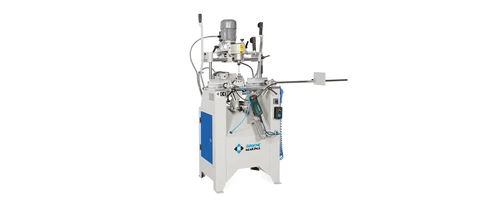
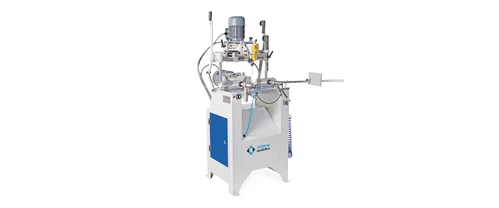
Triple-Drilling Copy & Water Drainage Milling Machine
-
Triple-Drilling Copy Milling Machine
-
Water-Drainage PVC Milling Machine (3 Motors)
-
Three-Motor Copy Milling Machine
-
Aluminum Copy Milling Machine (Pantograph Type)
-
3-Axis CNC Aluminum & PVC Profile Milling Machine
All these models are concrete examples of Özgenç Makina’s production-oriented approach and field experience. Whether manual or fully automatic, each is designed to take your production one step further.
What Should Be Considered When Choosing a PVC Milling Machine?
When purchasing a PVC milling machine, the two most critical factors are production volume and speed requirements. Selecting a machine that is either too small or too large for your production capacity results in wasted investment and reduced efficiency.
For low-volume operations, simple manual or semi-automatic machines may be sufficient. However, for high-volume and serial production, CNC-supported, multi-motor, fully automatic machines are indispensable. Speed directly affects processing time and labor costs, while adjustable milling parameters based on material type and dimensions influence both quality and machine lifespan.
Frequently Asked Questions (FAQ)
Which materials can a PVC milling machine be used on?
Primarily PVC, but also aluminum profiles, composite materials and certain plastic types, depending on the machine model and cutting tools used.
Which milling technique is more advantageous?
This depends entirely on production goals. CNC-controlled 3-axis machines are ideal for high-precision and automated production, while manual or semi-automatic copy milling machines are sufficient and economical for smaller-scale operations. Machines designed for special applications such as water drainage also improve quality and ease of use.
Need equipment consultation?
Our specialists will prepare an individual offer based on your requirements